Sons of Liberty Radio, August 22, 2026
Sons of Liberty RadioAugust 22, 2026
About This Episode
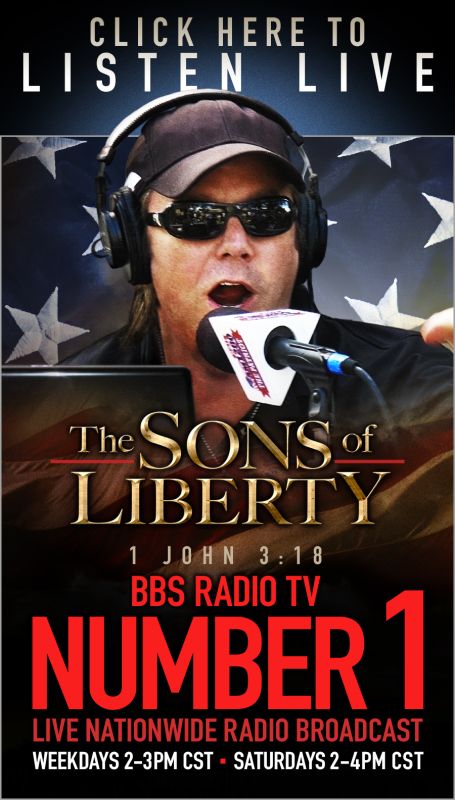
SONS of LIBERTY Radio with Bradlee Dean
Hour 1: Profit From Off Of The Blood Of Your Children
Hour 2: This Is An United Nations Agenda Unfolding Before Your Eyes
Who Profits From War? Military Power, Agenda 21, and the Battle Over National Sovereignty
Summary
War, the Constitution, and the Cost of Conflict
The episode opens with the host describing his family's military background and distinguishing between what he considers righteous and unrighteous wars. He argues that many modern U.S. military interventions have lacked constitutional legitimacy and repeatedly emphasizes the human cost borne by service members and their families. The host lists numerous conflicts and contends that political leaders, financial interests, and the military-industrial complex benefit from war while ordinary citizens do the fighting. He also argues that the public is repeatedly persuaded into wars by misleading narratives. Throughout this portion, the host frames the issue through constitutional language, Christian scripture, and appeals for public accountability.
War Profits, Smedley Butler, and the Military-Industrial Complex
The host invokes Smedley D. Butler's "War is a racket" argument and uses it to reinforce his criticism of war profiteering. He discusses the duty of military and government personnel to uphold the Constitution rather than simply follow orders, drawing a comparison to the defense of following orders at the Nuremberg trials. An archival segment about Dwight D. Eisenhower's farewell address focuses on the warning against unwarranted influence by the military-industrial complex. The host then plays a General Wesley Clark clip recounting discussions after September 11 about plans to attack Iraq and other countries. These excerpts are used by the host to support his broader position that military policy can be driven by institutional and political interests rather than direct threats.
Iraq, Weapons of Mass Destruction, and Public Trust
A large portion of the first hour focuses on the Iraq War and the failure to find the weapons of mass destruction used publicly to justify the invasion. The host plays a George W. Bush interview excerpt in which the former president describes the search for weapons and the realization that they had not been found. He also plays an unidentified male speaker criticizing the case for war and asserting that Iraq had no connection to al-Qaeda or the September 11 attacks. The host presents these clips as evidence that the public was misled and argues that financial interests benefited from the conflict. He repeatedly calls on listeners to question official narratives, hold leaders accountable, and distinguish loyalty to the country from obedience to particular officials.
Second-Hour Focus on Islam, Immigration, and Political Power
The second hour shifts toward the host's concerns about Islam, immigration, elected officials, and political developments in Minnesota and other states. The host describes what he sees as coordinated political and media efforts that enable Muslim organizations and candidates to gain influence, and he presents these claims within his Christian and constitutional worldview. He discusses Jake Lang, voter-fraud allegations, Minnesota politics, and federal policy, while warning listeners that he believes the issue is national rather than confined to one state. These are arguments and allegations made by the host; the transcript itself does not independently verify them. Prerecorded promotional and historical segments also discuss Thomas Jefferson, the Barbary states, and early American conflicts with North African powers.
Ron Bransner on Saudi Arabia, Agenda 21, and Regionalization
Guest Ron Bransner joins the program to discuss a U.S.-Saudi economic and defense partnership and what he describes as a broader United Nations agenda. He argues that Saudi investment, technology cooperation, energy policy, NGOs, regional development organizations, and religious organizations are connected to Agenda 21 and a movement toward regionalized governance. Bransner focuses especially on Minnesota, which he describes as a central location for these developments, and he alleges cooperation among political parties, Islamic organizations, and various nonprofit structures. The host and guest repeatedly connect their political analysis to biblical passages and their interpretation of Islamic texts. The conversation contains numerous specific numerical, historical, legal, and religious claims that are preserved as the speakers' statements rather than presented as independently established facts.
Calls for Civic, Constitutional, and Religious Action
The closing discussion asks what listeners should do in response to the developments described during the episode. Bransner argues for greater Christian participation in elections and for voters to place religious and moral values above party loyalty. He and the host discuss Sharia law, Islamic finance, prayer in schools and workplaces, immigration enforcement, and federal deportation efforts, with both speakers warning against what they view as institutional accommodation of Islam. The host repeatedly returns to the themes of constitutional accountability, justice, public vigilance, and personal responsibility. The episode ends while the host and guest are still discussing immigration, education, foreign influence, and what they describe as a red-green political axis.